Instagram Posts in Google Search: A Quick Guide
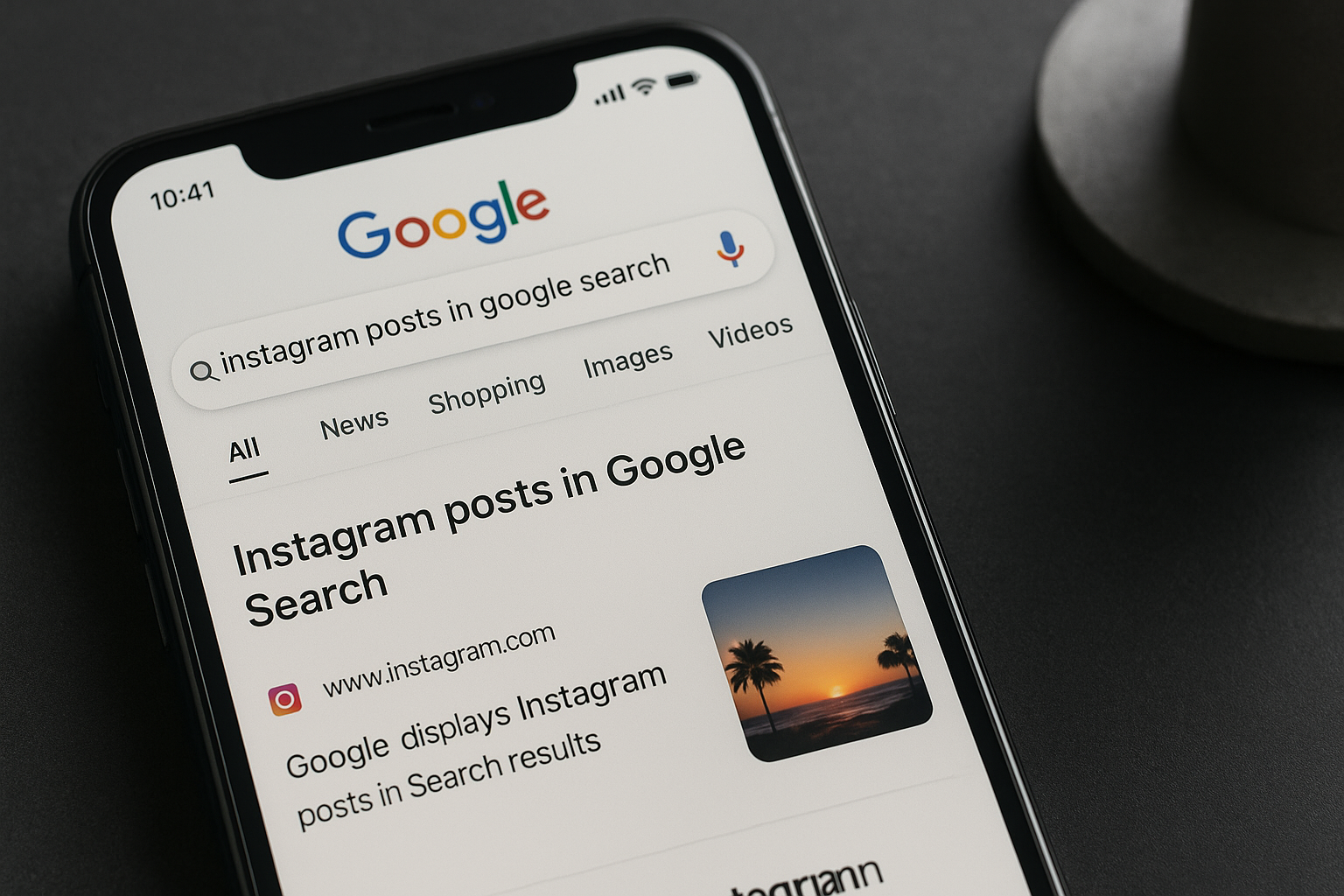
Type a hashtag into a search bar and you might see something that would have been impossible just a few years ago: an actual Instagram post, complete with caption and image, sitting right there in the results. No app required, no login, no scrolling through Stories to find it. This shift didn't happen overnight, and it hasn't been widely explained to the people it affects most - the creators and business owners whose content is now being surfaced in an entirely new way.
This guide breaks down exactly what's happening, why it matters, and how it changes the calculus for anyone posting on Instagram professionally. We'll cover the mechanics behind indexing, the practical steps you can take to make your own content more discoverable, and the recent shifts worth paying attention to. We'll also touch on how engagement plays into visibility - including why some businesses invest in services like instagram boost likes to strengthen a post's performance metrics before it has a chance to gain traction elsewhere.
By the end, you'll have a grounded, practical understanding of this feature - not a vague sense that "something changed," but a clear picture of what's actually going on and what you can do about it.
What Is Instagram Posts in Google Search?
At its core, this refers to the appearance of public Instagram content - photos, captions, and sometimes Reels - directly within web search results, rather than exclusively inside the Instagram app or website. For years, Instagram content was largely siloed. Crawlers had limited access to profile pages, and most posts stayed invisible outside the platform itself. That has changed for public accounts meeting certain criteria, and now a portion of Instagram's content library is treated more like any other indexable web page.
This doesn't mean every post from every account shows up. Eligibility depends on account settings, regional availability, and how the platform has chosen to expose content to outside crawlers at any given time.
- Only public accounts are eligible - private profiles remain invisible to outside indexing.
- The rollout has been uneven, appearing in some regions and search markets before others.
- Both static photo posts and Reels can potentially be indexed, depending on account type and settings.
- Indexing isn't automatic or guaranteed; it depends on how content is structured and how the platform exposes it at any given time.
A simple example: someone searches for a specific brand name paired with a product term. If that brand has a public, well-optimized Instagram account with relevant captions, a matching post might appear in the results, sometimes with a thumbnail and a caption preview. This is different from Instagram simply being mentioned on a webpage - the actual post itself becomes a result.
How Instagram Posts Appear in Google Search: Technical Details
Understanding the surface-level definition is one thing; understanding the mechanics behind it is another. The indexing process depends on a handful of technical prerequisites and behavioral signals, and small account decisions can make the difference between a post being crawlable or invisible.
Requirements for Indexing
For a post to have any chance of appearing outside the app, the account it belongs to must be public. Private accounts are, by design, excluded from any external indexing - there's no workaround for this, and it's intentional on the platform's part. Business and creator accounts tend to have more consistent visibility than standard personal accounts, likely because they're structured with public-facing intent from the start. Beyond account type, the profile and posts must not carry any technical signals blocking external crawlers from accessing the content.
Ranking Factors That Influence Visibility
Once a post is technically eligible for indexing, several factors influence whether it actually surfaces for a relevant search. Caption relevance matters - a caption that clearly describes the content in natural language tends to perform better than one stuffed with disconnected hashtags. Engagement also plays a role; posts with stronger interaction (likes, comments, shares) tend to signal relevance and freshness more effectively than posts that receive little attention after publishing. This is part of why some accounts focus deliberately on building early engagement momentum, since a post gaining traction quickly tends to be treated as more relevant than one that stalls.
| Factor | Effect on Visibility | Example |
|---|---|---|
| Public account status | Required for any indexing to occur | Business account with open visibility settings |
| Caption clarity | Improves relevance matching for related searches | Descriptive caption instead of hashtag-only text |
| Engagement level | May increase perceived relevance and freshness | Posts with active comments and shares shortly after publishing |
| Private account settings | Blocks indexing entirely | Personal profile set to private |
Instagram Posts in Google Search: Step-by-Step Guide for Users and Businesses
Once you understand the mechanics, the natural next question is practical: what can you actually do to improve your odds? The good news is that most of the groundwork involves habits many accounts should already be practicing.
- Switch to a public business or creator account if visibility is a priority - private accounts are automatically excluded.
- Write captions in clear, natural language that describes the post's actual content, rather than relying solely on hashtag strings.
- Use a small number of specific, relevant hashtags rather than a long list of generic ones.
- Check whether your existing posts already appear by searching your brand name or a distinctive phrase from a caption.
- Monitor how new posts perform over time, paying attention to which ones gain traction and which stay flat.
Consider a small business posting a product photo. A caption that reads only "#newdrop #shopnow #style" gives little for anything to match against. A caption that instead describes the product, its use, and relevant details gives far more substance to work with. That difference alone can shift a post from invisible to discoverable.
A few practical warnings are worth keeping in mind. Switching an account from public to private after it has already been indexed can cause previously visible posts to disappear from results, sometimes with a delay before the change takes full effect. Overloading captions with irrelevant keywords in an attempt to game visibility tends to backfire, producing text that reads poorly to actual visitors even if it technically contains popular terms. And chasing visibility without maintaining consistent posting habits rarely produces lasting results - sporadic activity gives little for anything to build momentum around.
What's New: Instagram Posts in Google Search Latest Updates
This is not a static feature. Availability has expanded gradually since it first appeared, moving from a narrow rollout into a broader, though still uneven, presence across different regions. Reels have increasingly been included alongside static photo posts, reflecting the platform's broader shift toward video-first content. Caption previews shown alongside indexed posts have also become more detailed in some markets, giving users a clearer sense of what a post contains before clicking through.
- Expansion beyond static photo posts to include Reels in more markets.
- Gradual increase in regional availability, though coverage still varies noticeably by country.
- More detailed caption previews appearing alongside indexed results in some regions.
- Continued emphasis on public business and creator accounts as the primary beneficiaries of visibility.
Because this is an evolving area, it's worth periodically rechecking whether your own content appears, rather than assuming a single check months ago still reflects current reality.
Benefits and Risks of Having Your Instagram Posts Indexed by Google
Visibility outside the app is not automatically a win for everyone, and it's worth weighing both sides before actively optimizing for it. For businesses and creators seeking wider reach, indexing can put content in front of people who would never have searched within Instagram itself. It effectively adds another discovery channel on top of the app's own algorithm-driven feed and explore pages.
At the same time, this visibility comes with tradeoffs. Content that's meant for a specific audience or a temporary promotion can end up persisting in results longer than intended. Personal posts, even from otherwise public accounts, can surface in contexts the original poster never anticipated.
| Aspect | Benefit | Risk |
|---|---|---|
| Audience reach | Exposure to people who don't use Instagram directly | Loss of control over the context in which content is discovered |
| Brand visibility | Additional discovery channel beyond the app itself | Older or outdated posts may resurface unexpectedly |
| Content permanence | Long-term discoverability for evergreen content | Cached versions may persist briefly even after deletion or privacy changes |
Once a public post has been indexed, deleting it or switching the account to private doesn't guarantee instant removal from cached results. There's typically a lag before changes fully propagate, which is worth remembering before posting anything meant to be temporary.
Common Mistakes to Avoid
Most missteps in this area come from treating visibility as a one-time setup rather than an ongoing practice. A handful of recurring mistakes show up repeatedly across accounts trying to improve their discoverability.
- Keeping an account private while expecting posts to appear outside the app - the two are mutually exclusive.
- Writing captions that rely entirely on hashtags with no descriptive context for what the post actually shows.
- Posting inconsistently, which makes it harder for any single post to gain the engagement that supports visibility.
- Ignoring alt text and image descriptions, which provide additional context that plain captions may not cover.
- Assuming that once a post is indexed, it will remain visible indefinitely regardless of later account changes.
Avoiding these missteps isn't complicated, but it does require treating each post as something meant to stand on its own outside the app, not just as content designed for an in-app audience already following the account.
Questions and Answers
Does every Instagram post show up outside the app?
No. Only posts from public accounts meeting certain technical and engagement criteria have a chance of being indexed, and even then, availability varies by region and account type. Private accounts are excluded entirely, regardless of content quality.
Can I remove my Instagram post from appearing outside the app once it's been indexed?
Deleting the post or switching the account to private are the two main options. However, cached versions can persist briefly after these changes, so removal isn't always instant.
Does this work the same way in every country?
No. Availability has expanded gradually but remains inconsistent across regions, with some markets seeing broader coverage than others at any given time.
Do hashtags matter more than captions for visibility?
Captions written in clear, descriptive language tend to provide more useful context than hashtags alone. A small number of relevant hashtags can help, but hashtag-only captions offer little for matching against actual search intent.
Is this feature only relevant for business accounts?
Business and creator accounts tend to show more consistent visibility, largely because they're structured for public-facing use from the start. Personal accounts can still qualify if they're public, though behavior may be less predictable.
Does higher engagement actually improve a post's chances of appearing in results?
Engagement signals like comments and shares appear to play a role in how relevant or fresh a post is perceived to be. This is one reason some accounts focus on building early momentum after publishing, rather than posting and waiting passively.