How to Safely Buy Verified Social Media Accounts on Trusted Online Marketplaces
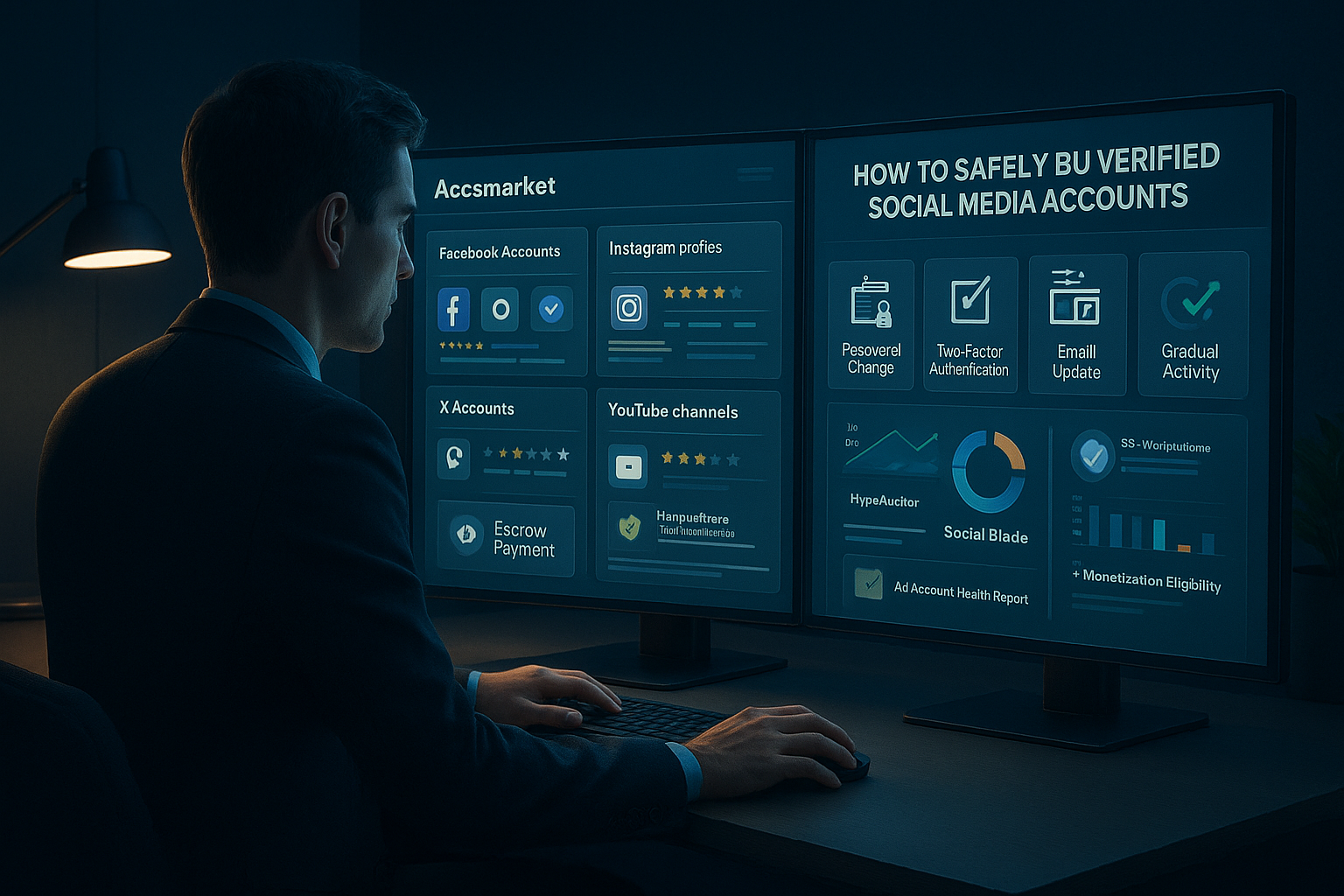
Most people who lose money buying social media accounts make the same mistake: they treat the transaction like a standard online purchase when it is anything but. The secondary market for social media accounts operates without consumer protection laws, platform endorsement, or consistent quality standards. Yet demand keeps growing, and for understandable reasons.
Marketers, entrepreneurs, and brand managers increasingly turn to social media account purchase as a way to skip the slow accumulation phase and gain immediate access to an established audience or platform feature set. For those specifically interested in Facebook, platforms like Accsmarket offer structured catalog listings where you can facebook account buy with seller ratings, account details, and a degree of transaction oversight - a meaningfully different experience from negotiating with an anonymous seller on a public forum.
The challenge is that this market attracts both legitimate operators and outright fraudsters, and distinguishing between them requires knowing exactly what to look for. Terminology is routinely misused. "Verified" gets applied to accounts that have nothing to do with official platform badges. Sellers disappear after payment. Accounts arrive with undisclosed restrictions. And buyers, having technically violated a platform's Terms of Service, have little recourse.
This guide covers every practical dimension of the process: what the market actually offers, how to read platform-specific value factors, how to evaluate an online account marketplace before committing money, and how to protect yourself from the most common traps. The goal is to give you the knowledge to act with confidence rather than hope.
Understanding the Market for Social Media Account Purchases
The secondary market for social media accounts exists because platform growth takes time, and time has a cost. Building an audience from zero on any major platform - Facebook, Instagram, X, or YouTube - typically requires months of consistent effort before the account reaches a scale that delivers meaningful business results. For many buyers, purchasing an established account is a rational economic decision rather than an impulsive shortcut.
The reasons vary considerably depending on the buyer. A performance marketing agency may want an aged Facebook account to access ad features that newer accounts are restricted from. A content creator may want a YouTube channel that already meets the threshold for monetization. An e-commerce brand entering a new geographic market may want a local Facebook page with an existing following rather than building one from scratch. Each use case reflects a genuine demand that the secondary market has evolved to serve.
What the market actually offers is more varied than most buyers initially expect.
- Aged accounts: Accounts that have existed for several years, valued for their established history and lower likelihood of triggering platform security flags.
- Niche-specific accounts: Accounts already positioned within a particular industry or content category, valued for audience relevance.
- Accounts with followers: Profiles or pages with an existing subscriber or follower base, varying widely in authenticity and engagement quality.
- Monetized accounts: Channels or profiles already enrolled in a platform's monetization program, valued for eliminating eligibility waiting periods.
- Ad accounts: Specifically Facebook or similar ad accounts with established spending history, valued by advertisers for bypassing new account limitations.
The supply side is equally diverse. Individual sellers who have built or accumulated accounts over time list them directly. Resellers purchase accounts in bulk and sell them individually. Dedicated platforms aggregate listings from multiple sellers and apply varying degrees of vetting. Each source type carries different risk profiles.
One point buyers must understand before entering this market: nearly every major social media platform explicitly prohibits the sale or transfer of accounts in its Terms of Service. This does not make buying accounts illegal in most countries, but it does mean the buyer assumes the risk of account suspension or termination at any time, with no platform-level recourse. That context shapes every practical decision that follows.
| Account Type | Typical Features | Common Use Case | General Price Range |
|---|---|---|---|
| Aged personal profile | Several years old, minimal activity history | Ad account setup, platform access | Low to moderate |
| Niche page or profile | Established content category, existing followers | Brand entry into a specific audience segment | Moderate to high |
| Monetized YouTube channel | Meets YPP thresholds, active subscriber base | Immediate content monetization | High |
| Facebook ad account | Spending history, established trust score | Performance advertising without new account limits | Moderate to high |
| High-follower Instagram profile | Large audience, niche or general | Influencer marketing, brand promotion | Variable, often high |
What "Verified" Actually Means Across Different Platforms
The word "verified" is one of the most consistently misused terms in the account trading market. Sellers apply it broadly and buyers accept it without scrutiny, which creates significant mismatches between what is paid for and what is actually received. Understanding precisely what verification means - and does not mean - on each major platform is essential before you buy verified accounts of any kind.
Official platform verification is a status granted by the platform itself to confirm the authenticity of a notable individual, brand, or organization. On Facebook, this is represented by a blue or gray badge attached to a Page or profile. On Instagram, X, and YouTube, similar badges exist with their own eligibility criteria. The critical point: these badges are tied to the verified entity, not to the account credentials. When ownership of an account changes hands, the platform's verification status does not transfer with it. In most cases, the badge is removed once the platform detects an ownership change or the verified entity no longer controls the account.
What sellers in this market typically mean by "verified" is something quite different - and considerably less valuable. Common uses of the term include:
- Accounts confirmed with a real phone number or email address
- Accounts that have passed a basic identity check at registration
- Accounts the seller claims have not been flagged or restricted
- Accounts with a sustained activity history that signals legitimacy to platform algorithms
None of these features are worthless - an account linked to a real phone number and with genuine activity history is meaningfully more stable than a freshly created throwaway account. But they are not the same as official platform verification, and buyers who conflate the two will overpay.
| Platform | What Official Verification Means | Is Verification Transferable? | What Buyers Should Actually Check |
|---|---|---|---|
| Blue badge for notable profiles/Pages confirmed by Meta | No - badge is tied to the verified entity | Account age, ad account history, linked email availability, restriction history | |
| Blue badge for notable public figures and brands | No - badge is removed on ownership change | Follower authenticity, engagement rate, shadowban history, username value | |
| X (Twitter) | Blue checkmark available via subscription or notable status | Subscription checkmark can technically continue; notable status does not transfer | Account age, engagement quality, follower authenticity, prior suspensions |
| YouTube | Checkmark badge for channels with over 100,000 subscribers | No - badge is tied to subscriber count threshold, resets on ownership review | YPP status, watch hours, subscriber authenticity, content category compliance |
When evaluating any account for purchase, request concrete documentation from the seller. This includes screenshots of account analytics, login history where available, confirmation of access to the original linked email, and the account's creation date. An account with three years of consistent organic activity and full credential access is far more valuable than a freshly labeled "verified" listing with no supporting evidence.
How to Identify Legitimate Online Account Marketplaces
Where you buy matters as much as what you buy. The range of platforms facilitating account transactions spans from professionally operated marketplaces with buyer protection systems to informal social media groups where neither party has any accountability. Understanding the differences between these environments is the foundation of secure account trading.
A trustworthy online account marketplace shares several consistent characteristics. It operates with transparency: seller ratings are visible, account descriptions are detailed, and the platform has a clear policy on disputes and refunds. It provides some form of transaction protection - typically escrow, which holds the buyer's payment until account access is confirmed and the account matches its description. It has identifiable customer support. And it maintains a record of completed transactions that buyers can reference when evaluating a seller.
Platforms that lack these features are not simply lower quality - they are structurally unsafe for buyers. Without escrow, payment is released before access is confirmed and there is no mechanism to recover funds if the account is not delivered as described. Without seller ratings, there is no way to distinguish experienced, reputable operators from first-time or fraudulent listers.
The main categories of platforms used for account transactions carry meaningfully different risk profiles:
| Platform Type | Security Level | Buyer Protection | Best Suited For | Risk Level |
|---|---|---|---|---|
| Dedicated account marketplace | High | Escrow, dispute resolution | Most buyers, all experience levels | Low to moderate |
| General freelance platform | Moderate | Platform mediation, partial protection | Experienced buyers who vet sellers carefully | Moderate |
| Online forums | Low | None - reputation-based only | Experienced buyers with established seller relationships | High |
| Social media groups | Very low | None | Not recommended for financial transactions | Very high |
Before committing to any marketplace, work through this evaluation checklist:
- Confirm the platform has a written buyer protection or escrow policy - read it, not just the marketing summary.
- Check whether sellers have verifiable ratings and transaction histories, not just testimonials on the platform's own pages.
- Identify how disputes are handled: is there a dedicated support team, and what is the resolution timeline?
- Verify that the platform has functioning contact channels - email, live chat, or ticketing system.
- Review the refund or replacement policy: under what conditions can you get your money back or a replacement account?
A realistic example of what can go wrong: a buyer locates a seller through a Facebook group offering aged accounts at below-market prices. The seller requests payment via a cryptocurrency transfer with no escrow. After payment, the seller provides login credentials that work initially but stops responding. Within 48 hours, the account's original owner - who sold the credentials to the reseller - reclaims access. The buyer loses the payment entirely and has no platform to escalate the dispute to. This scenario is not exceptional; it is among the most common outcomes in unprotected transactions.
Step-by-Step Guide to Buying a Social Media Account Safely
A safe social media account purchase follows a structured sequence. Skipping steps in this process - particularly around verification and payment method - is where most buyers encounter problems. The following breakdown covers the full transaction lifecycle.
Before You Buy
The most important work happens before any money changes hands. Start by defining exactly what you need, because vague requirements lead to poor purchases. Specify the platform, the minimum account age, the niche or content category if relevant, the approximate follower or subscriber count, and the specific features you need - such as ad account access, monetization eligibility, or a particular username format.
Set a realistic budget based on what accounts with those specifications actually cost on legitimate marketplaces. If a listing is priced significantly below comparable accounts, treat that as a warning signal rather than a bargain.
Before approaching any seller, prepare a set of questions that will let you assess the account's actual condition:
- What is the exact account creation date?
- What email address is currently linked, and will I receive full access to it?
- Has the account ever been restricted, suspended, or flagged for any policy violation?
- What is the posting or activity history for the past six months?
- Are there any linked assets - Pages, Groups, ad accounts - and will they transfer?
- Is the original phone number linked, and can it be changed post-purchase?
During the Transaction
Every financial transaction in this market should run through escrow or a platform-protected payment system. This is non-negotiable. Escrow holds your payment until you confirm that the account has been delivered as described - only then is the payment released to the seller. Any seller who refuses escrow and insists on direct payment should be treated as a significant risk.
Conduct all communication through the marketplace's internal messaging system. This creates a documented record that can support a dispute if needed. Avoid moving conversations to external messaging apps before the transaction is complete.
Follow this sequence when executing the transaction itself:
- Initiate contact through the marketplace's internal messaging system and send your prepared questions.
- Request proof of account ownership - screenshots of the account dashboard, analytics, and linked credentials.
- Agree in writing (within the platform's messaging system) on the specific terms: what is included, the post-sale support window, and what constitutes grounds for a replacement or refund.
- Initiate the escrow payment through the marketplace's official payment process - do not send funds outside the platform.
- Receive the account credentials and verify full access before releasing the escrow payment.
During the verification step, check that you can log in successfully, that the account matches its described specifications, and that you can access all linked credentials including the email address. If anything does not match, raise a dispute through the marketplace before releasing payment.
After the Purchase
Securing the account immediately after purchase is as important as the purchase itself. The window between receiving credentials and completing the security transition is when accounts are most vulnerable to reclaim by the previous owner.
Complete the following steps as quickly as possible after confirming access:
- Change the account password immediately to a strong, unique password you have not used elsewhere.
- Update the linked email address to one you control.
- Enable two-factor authentication using your own phone number or authenticator application.
- Update the account recovery phone number to your own.
- Review connected applications and revoke access to any third-party apps you do not recognize.
After securing the account, avoid making dramatic changes to its activity pattern immediately. Platforms monitor for sudden shifts in login location, posting frequency, and behavior type. Gradual use that mimics the account's established pattern reduces the risk of triggering automated security reviews. This warm-up period may feel unnecessary, but it meaningfully reduces the chance of early account complications.
Platform-Specific Considerations: Facebook Profile Sale and Beyond
Account value and risk factors are not uniform across platforms. What makes a Facebook account worth purchasing differs substantially from what makes a YouTube channel valuable, and the risks involved in each transaction vary accordingly. Buyers who apply a generic checklist across all platforms will miss critical platform-specific details.
Buying Facebook Accounts
Facebook accounts - including personal profiles, business Pages, and ad accounts - represent one of the most active categories in the secondary market. A Facebook profile sale can involve any combination of these assets, and understanding what each component contributes to the overall value is essential.
For personal profiles, account age is the primary value driver. Older profiles are less likely to encounter the aggressive identity verification checkpoints that Facebook applies to new or recently created accounts. An account with several years of activity, a consistent posting history, and a real phone number attached carries substantially more practical value than a recently created profile, regardless of any "verified" label a seller may apply.
For ad accounts specifically, spending history and account health status matter enormously. An ad account with a clean history and established spending patterns gives the buyer a meaningful operational advantage. However, that history also includes any past violations - payment failures, policy strikes, or prior bans - which carry over to the new owner. Always request the full ad account health status before completing any Facebook-related purchase.
Key factors to verify before completing a Facebook profile sale:
- Account creation date and consistent activity history
- Full access to the linked email address (original registration email)
- Ad account status: active, restricted, or flagged
- Any connected Pages or Groups, and whether admin rights transfer cleanly
- Whether the account has ever triggered identity verification checkpoints
Buying Instagram, X, and YouTube Accounts
Instagram account value is primarily driven by follower count, follower authenticity, and niche relevance. A 50,000-follower account in a clearly defined niche with consistent engagement is worth considerably more than a 200,000-follower account where a large portion of the audience is inactive or inauthentic. Before completing an Instagram purchase, use a third-party analytics tool - such as HypeAuditor or Social Blade - to audit the follower quality and engagement rate independently. Also check whether the account has any shadowban history, which can suppress content visibility even when the account appears active.
For X (Twitter), account age and engagement quality are the primary value factors. The platform has historically been more lenient than others about account transfers, but older accounts with genuine engagement histories are still worth a meaningful premium over newer ones. Verify whether the account has any prior suspensions on record, as these can resurface as restrictions under certain conditions.
YouTube channel purchases follow a distinct logic because monetization eligibility - specifically membership in the YouTube Partner Program - represents a clearly defined threshold that buyers are often specifically trying to acquire. A channel already enrolled in the YPP and generating consistent watch time removes the eligibility waiting period entirely. Verify subscriber authenticity and content category compliance, since channels in restricted categories face additional monetization limitations regardless of subscriber count.
| Platform | Key Value Factors | Main Risk Factors | What to Verify Before Buying |
|---|---|---|---|
| Account age, ad account history, connected assets | Identity checkpoints, hidden ad restrictions, asset transfer issues | Email access, ad health status, restriction history | |
| Follower authenticity, niche alignment, engagement rate | Bot followers, shadowban history, engagement drop post-sale | Third-party follower audit, engagement rate, account history | |
| X (Twitter) | Account age, follower quality, engagement consistency | Prior suspensions, low-quality follower base | Suspension history, engagement metrics, follower authenticity |
| YouTube | YPP status, watch hours, subscriber authenticity | Policy violations in content history, restricted category content | YPP enrollment status, subscriber audit, content compliance |
Risks, Scams, and How to Protect Yourself
No amount of due diligence eliminates risk entirely in this market. But understanding the specific mechanisms of fraud - and the structural risks inherent to account trading - allows buyers to make genuinely informed decisions rather than discovering problems after the fact.
Common Scams to Watch For
The most prevalent scams in the account trading market follow recognizable patterns:
- Account reclaim scam: The seller provides legitimate credentials, receives payment (often outside escrow), then uses account recovery tools - linked email or phone number - to reclaim access shortly after the transaction. This is the single most common form of fraud in direct seller transactions.
- Bait-and-switch delivery: The account listed for sale has specific features - follower count, niche, monetization status - that the delivered account does not actually have. Without escrow and a clear dispute process, the buyer has little recourse.
- Fake escrow services: In direct transactions, sellers sometimes propose "escrow" through a service they control or are affiliated with. The buyer sends payment to what appears to be a neutral third party but is actually the seller or an associate.
- Hidden account restrictions: Accounts sold without disclosure of existing policy strikes, ad spending limits, or prior suspensions. These restrictions become the buyer's problem immediately upon purchase.
- Inflated follower counts: Accounts padded with bot followers to inflate apparent size. After purchase, a follower purge - which platforms conduct periodically - reduces the count significantly, leaving the buyer with a fraction of what they paid for.
Legal and Platform Policy Risks
The legal dimension of buying social media accounts is frequently misunderstood. In most countries, no law specifically prohibits purchasing or selling a social media account. The transaction itself is legal. What is prohibited is the violation of the platform's Terms of Service, which is a contractual matter, not a criminal one.
The consequences operate at the platform level: account suspension, permanent termination, loss of linked assets, and removal of any monetization status. For buyers who build meaningful business infrastructure on a purchased account, a platform-initiated termination can cause real financial damage with no legal avenue for recovery from either the platform or the seller.
For businesses in compliance-sensitive industries - financial services, healthcare, legal services - the risks extend further. Operating a brand presence through an account with an unclear ownership history introduces reputational exposure that can outweigh any operational benefit the purchase was intended to provide.
The platform-level risk is permanent and cannot be transferred away. Even the most reputable marketplace cannot guarantee that a purchased account will remain active indefinitely. This is a structural reality of the market that every buyer must accept before proceeding.
Risk Mitigation Strategies
Accepting that risk cannot be eliminated does not mean accepting that it cannot be managed. Practical risk reduction follows a clear logic:
- Always use escrow or platform-protected payment - this is the single most effective protection against the most common fraud scenarios.
- Independently verify account metrics using third-party tools before purchase, rather than relying entirely on seller-provided screenshots.
- Start with a lower-value purchase from any new seller before committing to a high-value transaction, regardless of their listed ratings.
- Never place critical business operations - primary customer communication channels, primary advertising infrastructure - on a single purchased account without a contingency plan.
- Maintain backup accounts or alternative channels so that a single account suspension does not disable an entire operation.
Making the Final Decision: Is Buying a Social Media Account Right for You?
With a complete picture of the market, the mechanics of verification, the transaction process, platform-specific considerations, and the risk landscape, the final question is practical: does buying a social media account actually make sense for your situation?
The honest answer is that it depends on what you are trying to accomplish and what alternatives are available to you. There are circumstances where a purchase is genuinely the most efficient path forward. There are others where the same resources would produce better results applied differently.
Situations where purchasing makes strong practical sense:
- You need platform features - such as ad account access or monetization eligibility - that require a minimum account history to unlock, and building that history organically would take longer than your operational timeline allows.
- You are entering a specific niche and want an audience already interested in that category rather than starting from zero in a crowded space.
- You have a clear, short-term use case - a campaign, a market entry, a product launch - where the account's value is tied to a defined window rather than a long-term brand asset.
Situations where purchasing is a poor fit:
- You are building a long-term brand where authenticity and audience trust are central to the value proposition. Audiences built on purchased accounts are rarely the organic communities that convert consistently over time.
- You operate in a compliance-sensitive industry where account history and ownership transparency carry regulatory or reputational implications.
- Your budget is limited and you cannot absorb the loss of the account through suspension. If losing the account would be financially significant with no recovery plan, the risk profile is too high.
Alternatives worth considering before deciding to buy:
- Organic growth supported by a content or paid promotion strategy - slower but produces an audience with genuine interest in your offer.
- Collaboration with existing account owners through sponsorship or content partnerships - achieves audience exposure without account ownership risk.
- Working with a growth-focused agency that builds account authority through legitimate means within platform guidelines.
| Buyer Situation | Buying Recommended? | Key Reason | Suggested Alternative |
|---|---|---|---|
| Short-term campaign, needs immediate platform access | Yes | Speed-to-function justifies the cost and risk | - |
| Long-term brand building, audience trust is central | No | Purchased audiences rarely convert with long-term loyalty | Organic growth or influencer partnerships |
| Compliance-sensitive industry | No | Ownership history ambiguity creates reputational exposure | Build owned channels with transparent history |
| Needs monetization eligibility quickly | Potentially | Eliminates waiting period if account is clean and verified | Accelerated organic growth strategy |
| Limited budget with no loss contingency | No | Suspension risk is financially unacceptable without a backup plan | Sponsored posts or partnerships instead of ownership |
Treating a purchased account as one component within a broader strategy - rather than the strategy itself - is the most defensible approach. The buyers who encounter the fewest problems are those who enter with clear objectives, realistic expectations about risk, and a plan that does not depend entirely on a single account remaining active indefinitely.
Questions and Answers
If I buy a verified account and the platform later suspends it, can I get my money back from the marketplace?
This depends entirely on the marketplace's refund policy and the timing of the suspension. Most reputable platforms will offer a replacement or refund if a suspension occurs within a defined post-sale window - typically 24 to 72 hours - and can be shown to result from a pre-existing condition the seller did not disclose. Suspensions that occur after that window, or that result from the buyer's own activity on the account, are generally not covered. Read the specific policy before purchasing.
How can I tell whether the followers on an account I want to buy are real before completing the transaction?
Use independent third-party audit tools such as HypeAuditor or Social Blade to analyze the account's follower growth pattern, engagement rate, and audience demographics. Genuine audiences show consistent, gradual growth and engagement rates that correspond to the follower count. Sudden spikes in followers, disproportionately low engagement for the follower size, and audiences heavily concentrated in unrelated geographic regions are all indicators of artificial inflation.
What is the safest payment method when buying from an online account marketplace?
Escrow through the marketplace's own payment system is the safest option. Escrow holds your funds until you confirm that the account has been delivered as described, then releases payment to the seller. Avoid any transaction that requires payment through irreversible methods - certain cryptocurrency transfers, gift cards, or direct wire transfers - without escrow protection, regardless of how trustworthy the seller appears.
Does buying a Facebook ad account mean I inherit its previous policy violations?
Yes. Facebook's ad account restrictions, spending limits, policy strikes, and payment failures are tied to the account itself, not to the individual who created it. When you take ownership of a Facebook ad account, you assume its full history. An account with a prior billing issue or policy violation may face immediate limitations or increased scrutiny as soon as it is used for advertising under new ownership. Always request a full ad account health report from the seller before completing any Facebook profile sale involving ad account assets.
Is there any platform where buying accounts carries significantly lower risk than others?
No platform officially permits account sales, so the baseline contractual risk - violation of Terms of Service - is present everywhere. In practical terms, enforcement intensity varies: some platforms apply more aggressive automated detection for ownership changes than others. However, enforcement patterns change over time and cannot be reliably predicted. Building a risk assessment on current enforcement leniency is not a sound strategy, since a platform can increase its detection efforts at any point without notice.
What should I do if the account I received does not match what was listed?
Do not release the escrow payment. Immediately document the discrepancy with screenshots comparing the listed specifications against the actual account condition. Contact the marketplace's dispute resolution team through the official support channel and submit your documentation. Reputable marketplaces have defined procedures for handling these cases and can mediate between buyer and seller. If the platform offers a time-limited dispute window, act within that window - delays significantly reduce the likelihood of a favorable resolution.