How Instagram Blend Works: A Complete Guide to Instagram's Shared Feed Feature
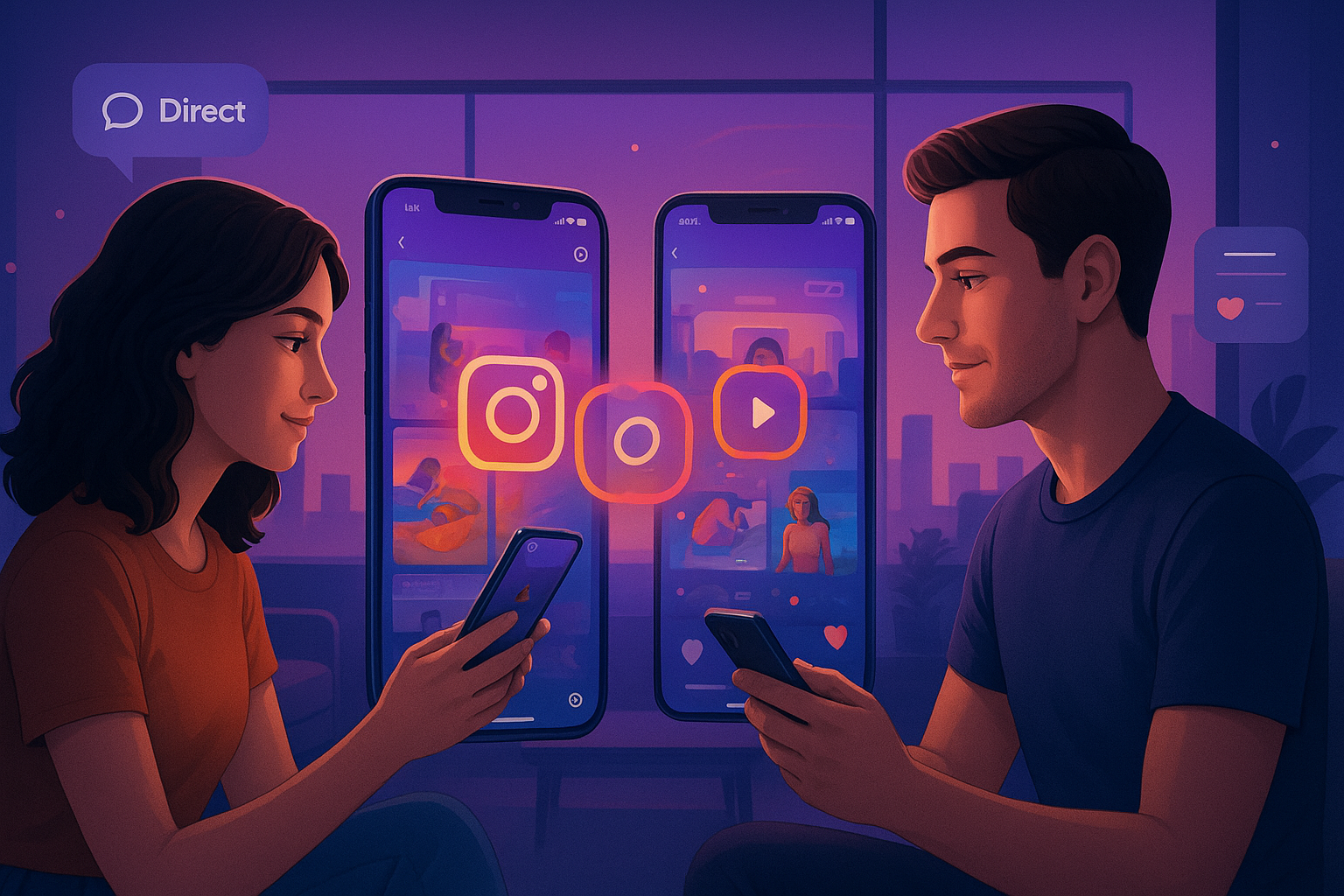
Instagram quietly rolled out a feature that changes how close friends discover content together, and most users still don't understand what it actually does. Blend isn't another algorithm tweak buried in settings - it's a shared, collaborative feed built for two people who want to see what the other is watching, saving, and reacting to in real time.
The feature emerged from a simple observation: people already send each other Reels constantly through direct messages, but that back-and-forth is clunky and easy to lose track of. Instagram Blend replaces that manual sharing with an automatic, merged feed that pulls content both users are likely to enjoy based on their individual activity. If you've ever wanted a friend's recommendations without the endless message threads, this is the mechanism built for that exact problem.
Adoption has grown quickly since launch, partly because creators noticed a ripple effect on distribution. When two accounts blend their feeds, content that resonates with either person gets extra visibility inside that shared space - which is one reason some creators now pair organic blending with services like boost instagram reels views to increase the odds their videos surface in these collaborative feeds. Understanding the mechanics behind Blend matters whether you're a casual user curious about a new icon in your DMs or a creator trying to figure out how shared feeds affect reach.
What Is Instagram Blend
Instagram Blend is a shared feed feature that merges the content preferences of two connected users into a single, combined stream of Reels and posts. Instead of scrolling your own feed and separately sending clips to a friend, Blend creates a joint space where both accounts' interests intersect. When someone asks what Instagram Blend actually is, the simplest answer is this: it's a private, two-person feed shaped by shared taste rather than a single algorithm profile.
The feature sits inside direct messages, not the main Explore or Home tab. That placement matters - Blend was designed as an extension of conversation, not a replacement for your primary feed. It works only between users who mutually opt in, meaning both people must agree to combine their activity before any shared feed appears.
The Origins Behind Instagram Blend
Blend grew out of Instagram's broader push toward making content discovery feel social again, rather than purely algorithmic. Direct message sharing had already become one of the most common ways people passed along Reels, and internal data likely showed that pattern was worth building a dedicated feature around. Rather than improving the sharing button, Instagram created an entirely new surface where two feeds merge based on mutual interest signals.
How Blend Differs From Regular Sharing
Sending a Reel to a friend is a one-time action - it disappears into the chat history and rarely gets revisited. Blend is persistent. It continues generating new content for both users as long as the blend stays active, creating an ongoing feed rather than a single exchange. That distinction is what separates a casual share from a genuine collaborative feature.
How Instagram Blend Works Behind the Scenes
Once two users activate a blend, Instagram analyzes both accounts' engagement patterns - likes, watch time, saves, and interaction history - to identify overlapping interests. The system then populates a shared feed with content that satisfies both sets of preferences, rather than defaulting to whichever user has stronger engagement signals.
This is where Instagram Blend gets genuinely interesting from a technical standpoint. The feed isn't a simple average of two people's Home tabs. It actively looks for intersection points - content categories, creators, or formats that both accounts already show interest in - and prioritizes those over content only one person would typically see.
The Role of Shared Interests
The stronger the overlap between two users' existing habits, the more relevant the blended feed becomes. Two friends who both watch cooking content and travel Reels will see a feed dominated by those categories. Two friends with almost no overlapping interests will get a thinner, less cohesive blend, since the system has fewer shared signals to work with.
Privacy and Data Handling in Blend
Blend only shares behavioral signals relevant to content recommendation - it doesn't expose private messages, saved posts lists, or full activity histories to the other user. Either participant can leave the blend at any time, which immediately stops the shared feed from updating and removes the connection from both accounts.
Instagram Blend Explained: Step-by-Step Setup
Getting started with Blend takes only a few taps, but the process depends on mutual agreement between both users.
- Open a direct message conversation with the friend you want to blend with.
- Look for the Blend prompt or icon within the chat interface.
- Send the blend invitation to your friend.
- Wait for your friend to accept the invitation from their side.
- Once accepted, the shared feed appears within the same conversation thread.
If your friend doesn't respond or declines, no blend is created and your individual feeds remain untouched. Instagram designed this deliberately as an opt-in system precisely to avoid one user's data being pulled into a shared space without explicit consent.
Instagram Blend Latest Updates and Changes
Since its initial rollout, Instagram has made incremental adjustments to how Blend surfaces content and how many users can participate in a single shared feed. Early versions limited Blend strictly to pairs, but ongoing refinements have focused on improving the accuracy of shared-interest detection rather than expanding group size.
Feedback from users has pushed Instagram to fine-tune how quickly the blended feed updates and how it handles situations where one person's activity shifts significantly, such as suddenly following many new accounts in an unrelated category. The system now appears to weigh recent activity more heavily than historical patterns, keeping the blend feeling current rather than anchored to outdated preferences.
What's Changed Since Launch
- Improved detection of genuinely shared interests rather than surface-level overlaps
- Faster feed refresh rates when one user's activity changes noticeably
- Clearer in-app indicators showing when a blend is active versus paused
- Better handling of content exclusions for topics either user wants filtered out
Instagram Blend 2026: What to Expect Going Forward
Looking toward Instagram Blend 2026, the trajectory suggests deeper integration between shared feeds and creator discovery tools. As collaborative feeds become more common, creators will likely need to think about how their content performs not just in individual feeds but within blended pairs, since a single blend can effectively double the visibility of a well-matched Reel.
Expect continued refinement of the matching algorithm rather than a fundamental redesign. Instagram tends to iterate on features that show strong retention rather than overhaul them, and Blend's core mechanic - merging two people's interests into one feed - has proven sticky enough to justify ongoing investment rather than replacement.
Potential Directions for the Feature
Group blending beyond two people remains a plausible next step, though Instagram hasn't confirmed a timeline for that expansion. More granular controls over which content categories get included in a blend also seem likely, giving users finer control over what gets shared between accounts.
Instagram Blend vs Other Instagram Sharing Features
Blend isn't the only way Instagram facilitates shared content experiences, and understanding where it fits relative to other tools clarifies why it exists as a separate feature rather than an extension of something already available.
| Feature | Primary Function | Persistence |
|---|---|---|
| Instagram Blend | Merges two users' content preferences into a shared feed | Ongoing until either user exits |
| Direct Message Sharing | Sends individual posts or Reels to a specific person | Single instance, no continuation |
| Close Friends Stories | Restricts story visibility to a selected group | Active only per story upload |
| Collaborative Posts | Publishes one piece of content jointly under two accounts | Fixed once published |
The table above makes the distinction clear: Blend is the only feature built for continuous, evolving shared discovery rather than a one-time action tied to a single post or story.
Common Mistakes and Misunderstandings About Blend
Several misconceptions circulate about how Blend actually functions, and clearing them up helps set realistic expectations.
- Assuming Blend shares your entire activity history - it only shares recommendation-relevant signals
- Believing Blend requires both accounts to be mutual followers when it only requires the ability to message each other
- Expecting the blended feed to be identical to either person's individual Home feed
- Thinking a blend, once created, is permanent and can't be exited
- Confusing Blend with Close Friends, which serves a completely different purpose
Avoiding these misunderstandings makes the feature far less confusing when you actually try it with a friend for the first time.
Questions and Answers
Can more than two people join the same Instagram Blend?
Currently, Blend is designed for two users at a time. Instagram hasn't confirmed group blending as an available option, though it remains a plausible future addition given user demand.
Does Instagram Blend affect my main Home feed?
No, Blend operates as a separate feed within direct messages. Your regular Home feed continues to follow your individual activity and preferences independently of any active blend.
Can I leave a blend without notifying the other person?
Yes, either participant can exit a blend at any time, and the shared feed stops updating immediately. The other user will typically see that the blend has ended, though the exact notification behavior may vary.
Does Instagram Blend work if we don't follow each other?
Blend requires the ability to message each other directly, which generally means at least one form of connection exists between accounts. Mutual following isn't strictly required in every case, but messaging permissions are.
Will Instagram Blend replace Close Friends or Direct Message sharing?
Unlikely. Blend serves a distinct purpose focused on ongoing content discovery between two people, while Close Friends and direct sharing address different needs around story visibility and one-time content exchange.
Does having an active blend impact how often my content gets seen?
It can, since content that resonates with both users in a blend gets additional visibility within that shared feed. This is part of why some creators pay closer attention to how their Reels perform across blended feeds, not just individual ones.